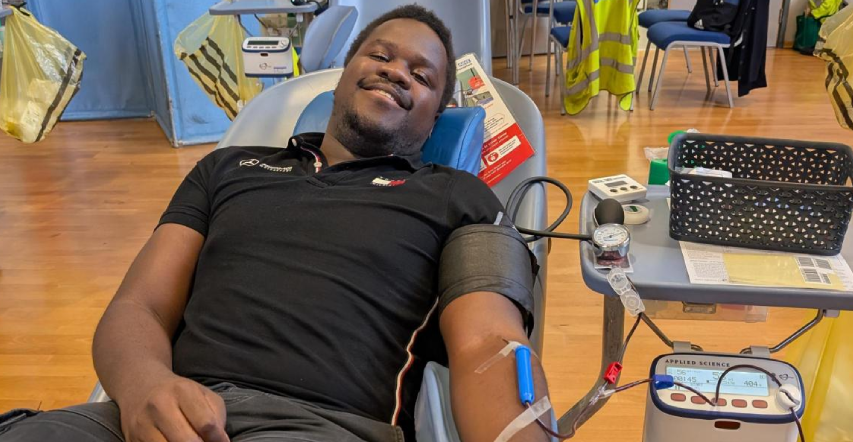
Tinashe Chigora, 29, from Crawley in West Sussex, is one of just 1,200 people on the UK’s rare donor panel, a group crucial to supporting patients with sickle cell disorder.
His blood is so unique that he is called in especially to donate to people with sickle cell.
Mr Chigora said: “It’s such a small thing for me to do, but it could be the difference between someone living and someone dying. I am just happy to help people.”
Sickle cell patients require closely matched blood for regular transfusions. Transfusions using mismatched blood can cause patients to develop antibodies that make it harder to find suitable blood in the future.
Mr Chigora began donating while studying at the University of the West of England in Bristol. He said: “I thought, why not? I donated a few times and I didn’t know my blood was rare. “I first realised something was different when I started to notice they treated my blood bag differently.”
Dr Chiara Vendramin, clinical lead for rare donor medicine at NHS Blood and Transplant (NHSBT), said: “Mr Chigora is one of approximately 20 regular donors who are match for a patient with sickle cell disorder.
“Mr Chigora’s ongoing commitment to blood donation is extraordinary, as is the excellent work of the NHSBT blood collection teams in caring for our rare donors and ensuring that the special call-up process runs smoothly.”
The rare donor panel is made up of individuals identified through further testing during the donation process.
When they donate, their blood gets a special white tag, with handwritten notes about how they blood will be used.
Thousands of patients rely on regular blood transfusions to stay alive and manage their condition, many of whom come from Black heritage communities.
Why people with sickle cell need matched blood
Sickle cell disorder changes the shape of red blood cells. Sickle shaped cells can block blood vessels, causing extreme pain, organ damage and life threatening complications.
Regular transfusions replace damaged cells with healthy ones to prevent these complications.
Patients need an exact blood match to safely receive blood and avoid serious, lasting reactions.
The Ro blood subtype is crucial for treating people with sickle cell disorder. While rare in the general population, nearly half of all donors of Black heritage have this subtype.
Why give blood?
Giving blood saves lives. The blood you give is a lifeline in an emergency and for people who need long-term treatments.
Why do the NHS need you to give blood?
The NHS need new blood donors from all backgrounds to ensure there is the right blood available for patients who need it.
NHS need:
- Nearly 400 new donors a day to meet demand
- Around 135,000 new donors a year to replace those who can no longer donate
- 40,000 more black donors to meet growing demand for better-matched blood
- 30,000 new donors with priority blood types such as O negative every year
- More young people to start giving blood so we can make sure we have enough blood in the future