At 17 years old, Anie Hussain went from living an active teenage life to being told she had leukaemia in a matter of hours.
“I was somebody that had quite a lot of energy. I was doing Zumba, I was constantly on my feet and then suddenly, out of nowhere, I couldn’t even walk down the stairs without getting out of breath,” she said.
More than a decade later, Anie is now sharing her story to encourage more people from South Asian and Black communities to join the UK stem cell donor register.
After weeks of feeling unwell, Anie’s father insisted she get a blood test. That same night, doctors arrived at her family home in the early hours of the morning.
“Actually, that night, at three o’clock in the morning, we had a doctor show up to the house with flashing lights and saying that I need to go to hospital now because it is a life or death situation,” she said.
Doctors soon confirmed she had leukaemia.
“My dad was stood on my left shoulder and my mum was stood in the corner and he was trembling and the doctors told me that I had leukaemia and the first thing I remember saying was, ‘Am I going to die?’”
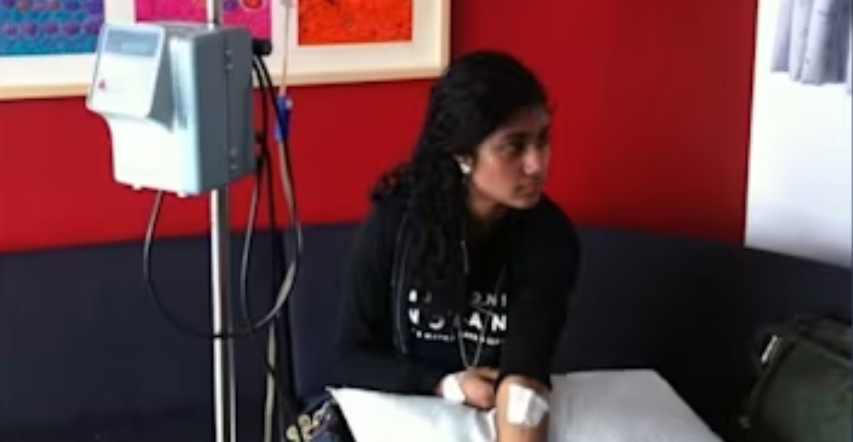
Over the next two years, Anie underwent chemotherapy, antibody therapy and repeated hospital treatment. At one point, she dropped to just five stone.
Eventually, doctors told her a stem cell transplant was her best chance of survival.
But finding a donor match proved difficult.
“One of my friends in the bay next to me – she was a white girl – and she was told she would need a stem cell transplant and the next day the doctors came to her and said that she had four 10 out of 10 matches on the register,” Anie said.
“She could basically pick and choose and she was going to survive. But I looked at the calendar and I was waiting for over eight months and there was not one match that was over six out of ten for me.”

Patients are more likely to find a stem cell match from somebody with a similar ethnic background, but people from South Asian and Black communities remain underrepresented on donor registers across the UK.
After months of waiting, Anie finally received a stem cell transplant. It was successful.
Charities say many people are still unaware of how straightforward stem cell donation can be.
Most donations are carried out through a process similar to giving blood, while joining the register usually only requires a simple cheek swab.
For Anie, increasing the number of people on the stem cell register could mean more families getting the outcome hers did.
“It’s just so important to sign up,” she said.
“I’m able to show you loads of friends who I’m here with today who have made it because of the stem cell register, but the flip side of that is that I’ve got loads of friends who aren’t here today because they didn’t get those matches.
“That’s why it’s so important. We need more people to sign up so people can make it.”
