

Today, the average human lives for about 71 years.
A rare few people will see their 100th birthday, earning the title of centenarian, and even fewer will live past 110.
We call these folks supercentenarians.
New research published in Cell Press reveals one possible explanation for how these superagers might be dodging the mounting risk of cancer and illness as the years progress.
At around 100 years, a rare form of T helper cells seems to proliferate in these lucky people, expanding and adapting as time marches on.
“These cells exhibit stepwise differentiation and cytokine plasticity, suggesting adaptive responses to persistent antigens during healthy aging,” the study’s authors write.
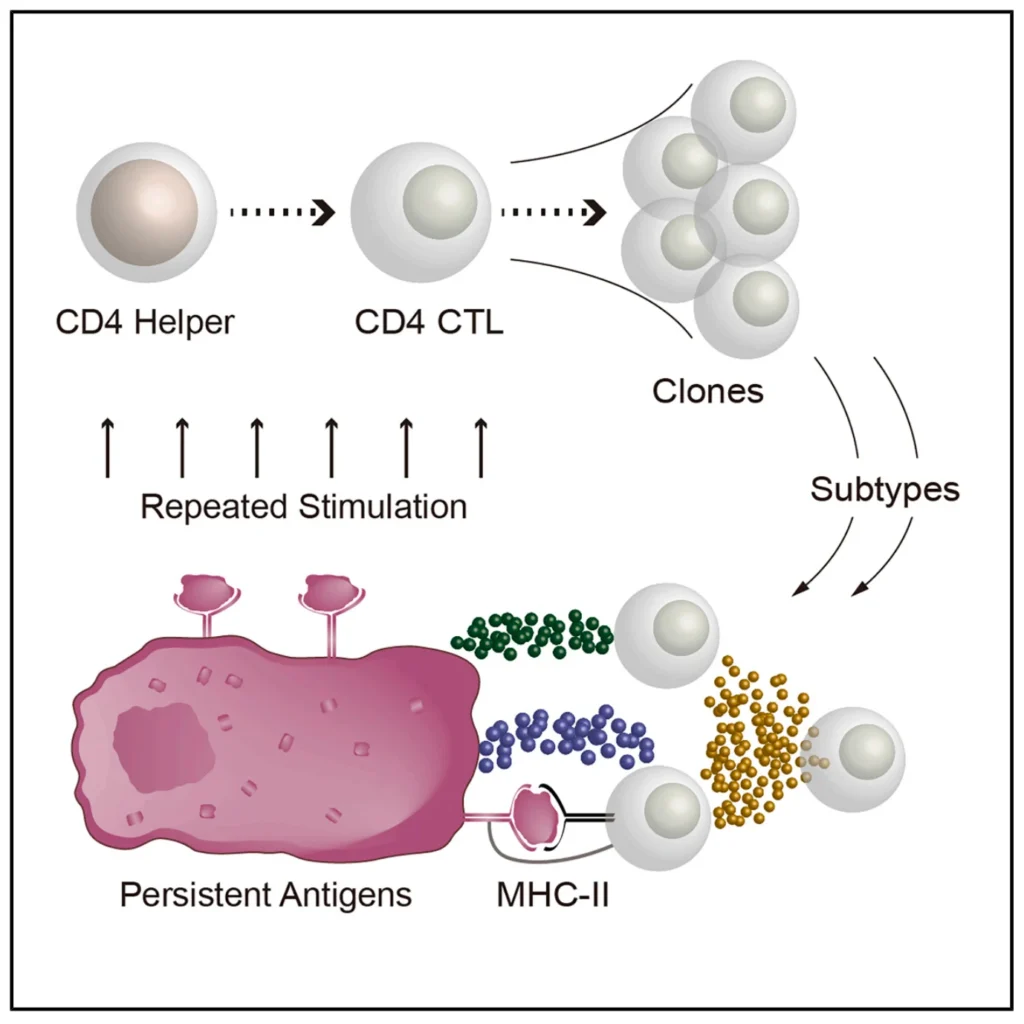
We all have T helper cells (aka CD4 cells) as part of our adaptive immune system.
In the samples from eight people in their 70s, 80s, and 90s, the median proportion of CD4 CTLs was 4 percent.
But even in this small sample, there were outliers: one participant who had yet to turn 100 actually had the highest proportion of these cells in their blood.
“The selective expansion of certain T cells suggests that, even in extreme old age, the immune system may continue to adapt to age-related challenges.”
On average, around 33 percent of the CD4 CTLs in their blood were clones of just one original cell.
“Our findings suggest that immune adaptation to these changes may contribute to exceptional longevity.”
The research was published in Cell Press.
